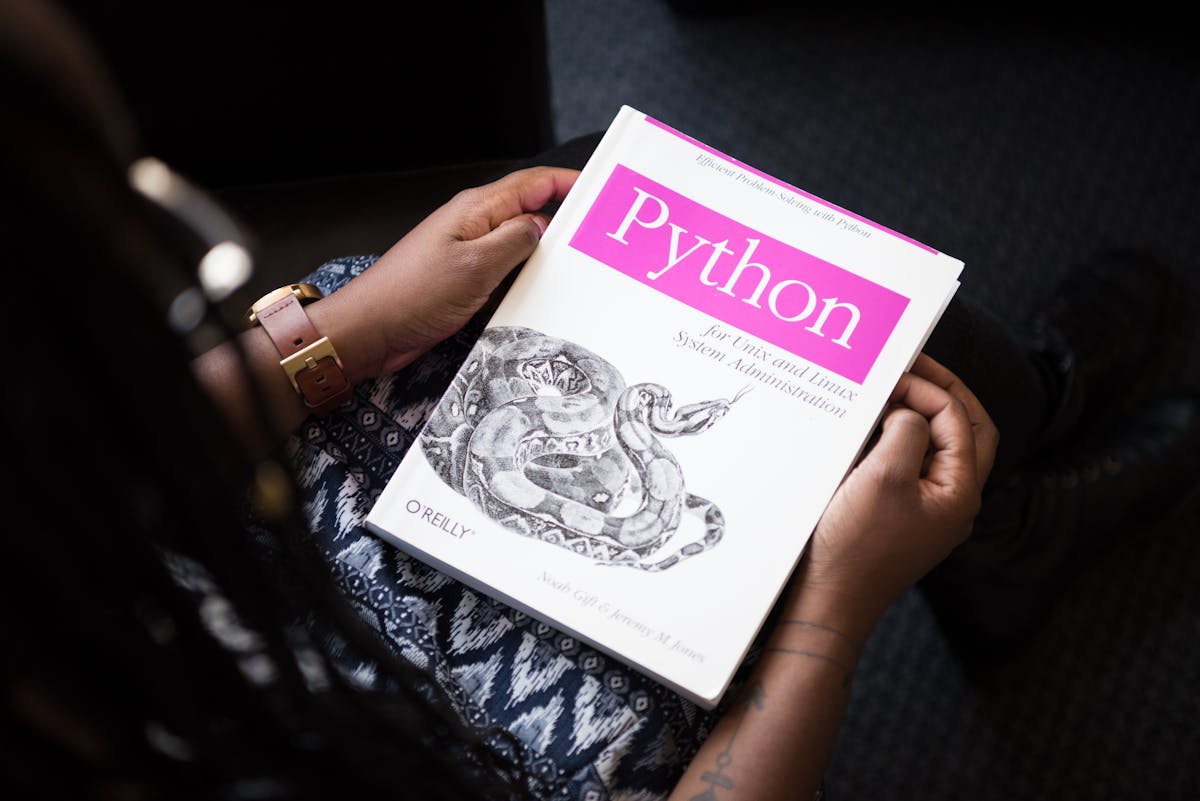
Python remains the dominant language for AI development in 2026, not because it’s the fastest language (it isn’t), but because of its library ecosystem. There are more high-quality, well-maintained Python libraries for AI work than in any other language, and the community of practitioners using them is massive — which means better documentation, more examples, and faster help when you’re stuck.
The challenge for anyone starting an AI project is figuring out which libraries you actually need. The ecosystem has expanded rapidly, and there’s a lot of overlap, redundancy, and some genuinely overhyped tools mixed in with the essentials. This guide covers the libraries worth knowing, organized by what they do, with honest assessments of when to use them and when to skip them.
LLM Integration Libraries
These are the libraries you’ll use to talk to AI models — sending prompts and processing responses.
OpenAI SDK
pip install openai
The official Python client for OpenAI’s API. It handles the HTTP requests, authentication, streaming, and response parsing for GPT-4o, GPT-4, and other OpenAI models. Simple and well-documented.
Quick example:
from openai import OpenAI

client = OpenAI()  # uses OPENAI_API_KEY from environment

response = client.chat.completions.create(
    model="gpt-4o",
    messages=[{"role": "user", "content": "Explain recursion in one sentence."}]
)
print(response.choices[0].message.content)
When to use it: Any time you’re building with OpenAI’s models. The official SDK is always the most up-to-date and best supported.
Anthropic SDK
pip install anthropic
The official client for Anthropic’s Claude API. Similar interface to the OpenAI SDK but with some Claude-specific features like the extended context window and streaming optimizations.
Quick example:
import anthropic

client = anthropic.Anthropic()  # uses ANTHROPIC_API_KEY from environment

message = client.messages.create(
    model="claude-opus-4-5",
    max_tokens=1024,
    messages=[{"role": "user", "content": "What's the best way to learn Python?"}]
)
print(message.content[0].text)
When to use it: Building with Claude models. Claude’s strengths in long-context tasks and writing quality make it worth knowing alongside the OpenAI SDK.
LangChain — Use with Caution
pip install langchain
LangChain is a framework for building LLM-powered applications — it provides abstractions for chains, agents, retrieval systems, and tool use. It became extremely popular in 2023-2024 as developers needed patterns for building on top of LLMs.
The honest assessment in 2026: LangChain is powerful but often over-engineered for simple use cases. The abstractions can obscure what’s actually happening, making debugging harder. The documentation has historically been inconsistent.
When to use it: Complex applications that need retrieval-augmented generation (RAG), multi-step agent workflows, or connection to many different LLM providers through a unified interface. For simpler use cases, calling the OpenAI or Anthropic SDK directly is cleaner and easier to debug.
When to skip it: For straightforward API calls, simple chatbots, or projects where you want to understand exactly what’s happening.
LlamaIndex
pip install llama-index
LlamaIndex is the best library specifically for building RAG (retrieval-augmented generation) systems — applications where you need to ground AI responses in your own documents, databases, or data sources.
If you’re building a chatbot that answers questions about your documentation, a search system over your internal knowledge base, or any application where the LLM needs to access specific external information, LlamaIndex is the right tool. It handles document loading, chunking, embedding, indexing, and retrieval with less boilerplate than building these components yourself.
When to use it: Any RAG application — chatbots over documents, semantic search, question-answering over custom data.
Data Handling Libraries
Pydantic
pip install pydantic
Pydantic has become essential for AI applications because it provides structured data validation — you define Python classes with type annotations and Pydantic ensures that data conforms to those types. This is particularly important for LLM applications where you need structured output from an AI model.
from pydantic import BaseModel
from openai import OpenAI

class ProductReview(BaseModel):
    sentiment: str
    score: int
    summary: str

client = OpenAI()
response = client.beta.chat.completions.parse(
    model="gpt-4o",
    messages=[{"role": "user", "content": "Review: 'Great product, very fast shipping!'"}],
    response_format=ProductReview,
)
print(response.choices[0].message.parsed)
When to use it: Almost always. If your AI application processes structured data or needs predictable output format from an LLM, Pydantic is essential.
Pandas
pip install pandas
Pandas is the standard library for data manipulation in Python — working with tabular data, CSV files, data cleaning, and analysis. For AI projects that involve data preprocessing, analyzing results, or working with datasets, Pandas is the go-to tool.
It’s not glamorous, but it’s everywhere. Any data pipeline feeding into an AI model will almost certainly involve Pandas.
NumPy
pip install numpy
NumPy is the foundational numerical computing library for Python. Most AI/ML libraries depend on it, and direct NumPy usage comes up whenever you’re working with vectors, matrices, or numerical transformations — which is common in AI applications dealing with embeddings and similarity calculations.
Web Framework for AI Apps
FastAPI
pip install fastapi uvicorn
When you want to turn your AI functionality into an API that other services (or a frontend) can call, FastAPI is the modern standard. It’s fast (built on Starlette and ASAP), automatic documentation with Swagger UI, and native async support — which matters for AI applications where API calls can take a few seconds.
Quick example:
from fastapi import FastAPI
from anthropic import Anthropic

app = FastAPI()
client = Anthropic()

@app.post("/summarize")
async def summarize(text: str):
    message = client.messages.create(
        model="claude-sonnet-4-5",
        max_tokens=256,
        messages=[{"role": "user", "content": f"Summarize this in 2 sentences: {text}"}]
    )
    return {"summary": message.content[0].text}
When to use it: Building any web API layer for your AI application. FastAPI is faster to develop with and more performant than Flask for most AI use cases.
Data Visualization
Matplotlib and Seaborn
pip install matplotlib seaborn
For visualizing data, model outputs, evaluation metrics, and analysis results. Matplotlib is the foundational library; Seaborn provides higher-level statistical plots with better default styling.
Not glamorous, but important for understanding what your AI system is doing and communicating results to others.
Agent Frameworks
Phidata / Agno
For building structured AI agents — systems where an LLM takes actions, uses tools, and works through multi-step tasks — newer frameworks like Phidata (rebranded as Agno) provide cleaner abstractions than raw LangChain agents.
The agent framework space is evolving rapidly. The specific library matters less than understanding the core concepts: tools, memory, planning, and execution loops.
The Stack You Actually Need
For most AI projects in 2026, you need:
- OpenAI SDK or Anthropic SDK — to call the AI model
- Pydantic — for structured data validation and output parsing
- FastAPI — if you’re building an API
- Pandas — if you’re working with data
- LlamaIndex — if you’re building a RAG system
LangChain is optional and should be added only if you specifically need its higher-level abstractions for a complex agent or retrieval system.
For learning how to use these libraries with AI assistance, see our How to Learn Python with AI guide and our OpenAI API Tutorial for Beginners.
Installing and Managing Dependencies
Use a virtual environment for every AI project:
python -m venv venv
source venv/bin/activate  # on Mac/Linux
pip install openai anthropic pydantic fastapi uvicorn
pip freeze > requirements.txt
For larger projects, consider uv — a modern Python package manager written in Rust that’s dramatically faster than pip and better handles dependency resolution.
Conclusion
The Python libraries you actually need for AI projects are fewer than the ecosystem suggests. Start with the official SDK for whichever AI provider you’re using (OpenAI or Anthropic), add Pydantic for structured outputs, FastAPI if you need an API layer, and Pandas for data work. Add LlamaIndex if you’re building a RAG system.
Avoid the temptation to import LangChain by default for every project — direct API calls are cleaner, easier to debug, and sufficient for most use cases. Add framework libraries when you have a specific problem they solve, not because they seem like what “serious” AI projects use.
Explore Our Courses to learn how to build real AI projects with these libraries from scratch.